
What Is Mild Crowding and How Does Invisalign Address It?
Invisalign typically takes 3 to 6 months to correct mild crowding, which involves 1 to 3mm of tooth overlap. Most mild cases require only 10 to 20 sets of custom clear aligners, making this one of the shorter orthodontic treatments out there. Because the tooth movement required is minimal, many patients wrap up treatment well before the six-month mark.
So what counts as mild crowding? If your teeth overlap just slightly in the front, orthodontists classify that as mild. It’s actually the most common reason people seek orthodontic treatment. The overlap is minor enough that Invisalign can handle it efficiently without the complexity of longer treatment protocols.
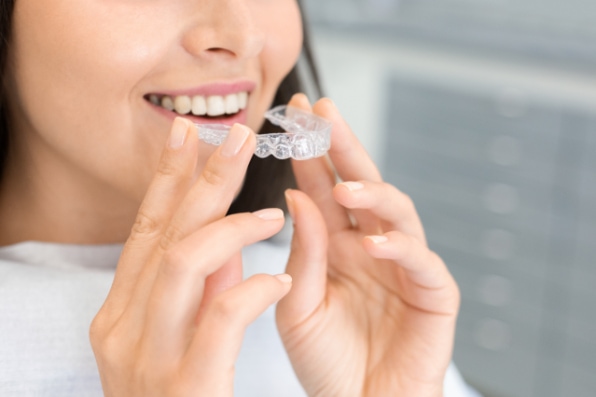
Invisalign works by using a series of custom clear aligners that gently shift your teeth into proper alignment. Each set of aligners makes small, precise movements. For mild cases, treatment is often classified as Invisalign Lite or Invisalign Express, both designed for simpler corrections.
During your first visit, your orthodontist takes digital scans of your teeth and creates a personalized treatment plan. You can actually see a preview of your expected outcome before you even start. It helps to see where you’re headed before you commit.
How Invisalign Works for Mild Crowding: Timeline Breakdown
For mild crowding, Invisalign treatment typically takes 3 to 6 months across four phases: consultation, active wear, check-ins, and retention. Here’s what that process looks like from start to finish.
Step 1: Initial Consultation and Digital Scan
At your first visit, your orthodontist examines your teeth and takes digital scans. These scans create a 3D model used to design your custom aligners, and you’ll see exactly how your teeth will move throughout treatment.
Step 2: Wearing Your Aligners
Once your aligners arrive, expect to wear them 20 to 22 hours per day. Switch to a new set every 1 to 2 weeks, depending on your personalized treatment plan. Each new aligner continues the gradual movement toward your final result.
Step 3: Progress Check-Ins
Plan on visiting your orthodontist every 6 to 8 weeks to make sure everything is tracking correctly. These visits are quick, usually just a few minutes.
Step 4: The Retainer Phase
After active treatment ends, a retainer keeps your teeth in their new positions. This prevents them from shifting back over time.
For mild crowding, you may need only 10 to 20 sets of aligners total. Compare that to moderate cases, which often require 25 to 40 sets. The simpler the correction, the faster you finish. Board-certified orthodontists use the most up to date technology to map out each phase, so every movement is planned with precision before your aligners are even made.
Benefits of Choosing Invisalign for Mild Crowding
The main benefits of Invisalign for mild crowding include shorter treatment time, nearly invisible appearance, removable convenience, and easier oral hygiene compared to metal braces. Here’s a closer look at why so many people choose this option for minor tooth overlap.
- Shorter treatment time: Most mild cases wrap up in 3 to 6 months
- Nearly invisible: Clear aligners are hard to spot, so most people won’t notice
- Removable: Eat whatever you want and brush normally
- Fewer office visits: Check-ins every 6 to 8 weeks instead of every 4 to 6
- Digital preview: See your expected results before treatment begins
Why Is Treatment Time Shorter for Mild Cases?
Mild crowding requires less tooth movement, which means fewer aligners and a faster finish. Moderate or severe crowding can take a year or longer by comparison. Digital treatment planning also plays a role, since every movement is mapped out in advance with no guesswork and no wasted time.
How Does Removability Improve Daily Life?
Removability is a big deal for busy adults and teens. You can take out your aligners for meals and enjoy whatever foods you want, with no restrictions at all. Brushing and flossing happen normally without working around brackets and wires, which keeps your oral health on track throughout treatment.
Fewer office visits also make a difference. With Invisalign, check-ins happen every 6 to 8 weeks rather than every 4 to 6 weeks like with metal braces. That means less time in the chair and more time doing what you love. The digital treatment preview also lets you see a simulation of your new smile before you even start, which takes a lot of the uncertainty out of the decision.
Invisalign vs. Braces for Mild Crowding: Which Is Faster?
Invisalign is typically faster than metal braces for mild crowding, averaging 3 to 6 months compared to 6 to 12 months with braces. Here’s a detailed comparison:
| Factor | Invisalign | Metal Braces |
|---|---|---|
| Treatment Time | 3 to 6 months | 6 to 12 months |
| Visibility | Nearly invisible | Visible metal or ceramic |
| Removability | Yes, for eating and cleaning | No, fixed in place |
| Office Visits | Every 6 to 8 weeks | Every 4 to 6 weeks |
| Compliance Required | High (22 hrs/day wear) | Built-in (always working) |
Invisalign’s speed advantage comes from its precision. Digital planning maps out every movement in advance, and the aligners deliver consistent, targeted pressure. Metal braces work well too, but adjustments happen manually at each visit.
That said, metal braces have one advantage: they’re always working. You can’t forget to wear them or take them out too often. With Invisalign, your results depend entirely on how consistently you wear the aligners as directed.
Board-certified orthodontists, including members of the American Association of Orthodontists, offer both options and can help you choose what fits your lifestyle best. Some people prefer the “set it and forget it” approach of metal braces. Others love the flexibility and discretion of Invisalign. Either way, the goal is the same: a result that lasts and a smile you feel great about.
What Affects the Cost and Duration of Invisalign for Mild Crowding?
The main factors that influence your Invisalign cost and timeline for mild crowding include the degree of overlap within the mild range, your consistency with aligner wear, whether refinement aligners become necessary, and your insurance coverage or payment plan.
Severity Within the Mild Range
Even within mild crowding, there’s variation. Teeth overlapping by 1mm need less movement than teeth overlapping by 3mm. More movement means more aligners and a longer timeline.
Your Consistency
This is a big one. Invisalign only works when you wear it. Patients who consistently wear aligners 22 hours per day finish on schedule. Those who slack on wear time extend their treatment, sometimes significantly.
Refinement Aligners
Sometimes teeth don’t track exactly as planned. If that happens, you may need refinement aligners to fine-tune your results. This can add 1 to 2 months to your timeline.
Insurance and Low Monthly Payment Options
Many dental insurance plans cover a portion of Invisalign treatment. Beyond insurance, low monthly payment plans help make treatment fit your budget.
According to the American Association of Orthodontists, the cost of orthodontic treatment varies based on case complexity, geographic location, and the specific treatment approach. For mild crowding cases requiring fewer aligners, costs typically fall on the lower end of the Invisalign spectrum.
Are You a Candidate for Invisalign to Correct Mild Crowding?
Good candidates for Invisalign to correct mild crowding have slight tooth overlap without major bite issues, healthy gums, and a willingness to wear aligners 20 to 22 hours daily. Not everyone qualifies, but mild crowding cases are often ideal. Here’s what makes someone a good fit:
- Mild overlap without major bite issues. If crowding is the main concern and your bite is relatively normal, Invisalign works great for this type of correction.
- Good oral health. No active gum disease or untreated cavities before starting.
- Willingness to wear aligners consistently. That means 20 to 22 hours every single day for the full duration of treatment. Results depend on it.
- Teens and adults both qualify. Age isn’t a barrier. Invisalign for Teens even includes compliance indicators so parents can check wear time.
The only way to know for certain is through a professional evaluation. During an initial consultation, your orthodontist examines your teeth, discusses your goals, and determines your exact timeline. A board-certified orthodontist with credentials from the American Board of Orthodontics and membership in the American Association of Orthodontists will have the training and clinical experience to identify the most effective approach for your specific situation.
Frequently Asked Questions About Invisalign for Mild Crowding
Can Invisalign Correct Mild Crowding?
Yes, Invisalign is well suited for mild crowding. Very mild cases can finish in as few as 3 months. If your teeth need only 1 to 2mm of movement, you may need just 10 to 14 sets of aligners. Consistent wear is the key to hitting that timeline.
Is Invisalign Faster Than Braces for Mild Crowding?
Generally, yes. Invisalign averages 3 to 6 months for mild crowding, while metal braces typically take 6 to 12 months for similar cases. The digital precision of Invisalign treatment planning contributes to these faster timelines.
Do I Need Attachments for Mild Crowding?
Some mild cases require small tooth-colored attachments bonded to certain teeth. These give the aligners better grip for specific movements. Your orthodontist determines if attachments are necessary during treatment planning, though not everyone needs them.
Will My Teeth Shift Back After Treatment?
Yes, teeth can shift back if you don’t wear your retainer consistently. Teeth have a natural tendency to drift toward their original positions, especially in the first year after treatment. Wearing your retainer as directed prevents relapse. Most orthodontists recommend every night at first, then a few nights per week long-term.
How Many Aligners Are Needed for Mild Crowding?
Typically 10 to 20 sets of aligners. The exact number depends on how much movement your teeth need and whether refinements become necessary. Your orthodontist gives you a specific number during your consultation.
Mild crowding is one of the quickest orthodontic issues to correct, and Invisalign makes the process comfortable and convenient. Most patients finish in just a few months and appreciate being able to smile confidently throughout treatment.
If you’ve been thinking about straightening mild crowding, a consultation with a board-certified orthodontist is a great place to start. An initial evaluation can give you a personalized timeline, a preview of your new smile, and a clear picture of what treatment will involve. Many orthodontic practices offer no-cost initial consultations, so there’s no barrier to getting the information you need to make a confident decision.